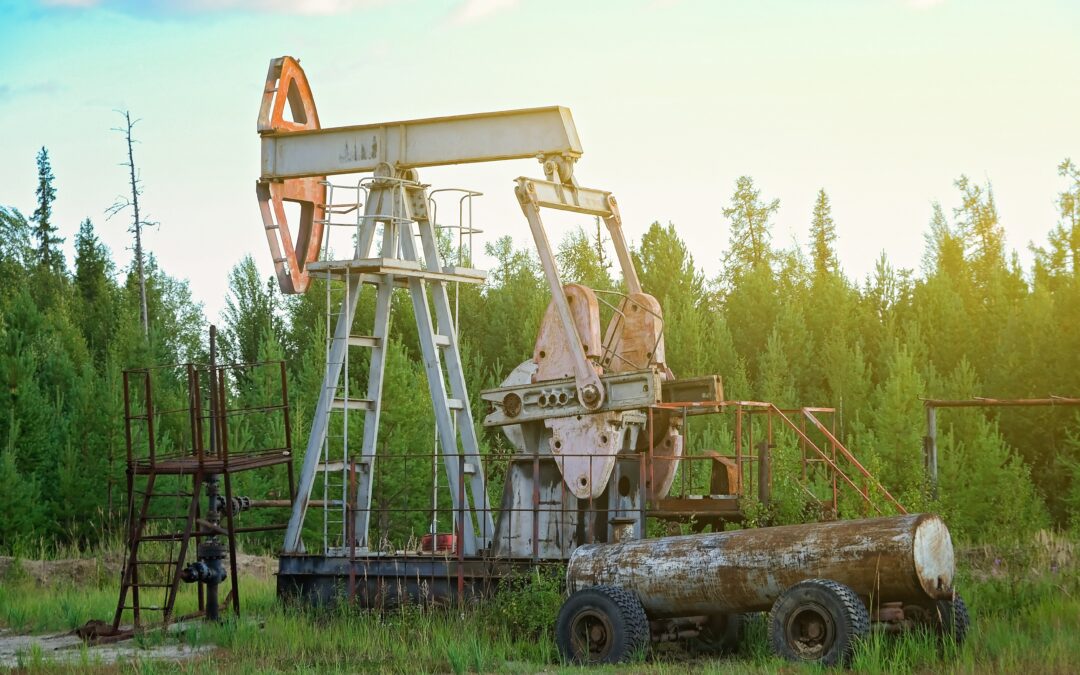
 CRS Releases New Report Exposing the Massive Taxpayer Risks of Bonding Rollbacks Conservatives for Responsible Stewardship has released a new in-depth report, Unplugged: The High Cost of Bonding Reform Rollbacks, revealing how the Trump administration’s plan to weaken federal oil and gas bonding requirements could leave American taxpayers responsible for up to $753.5 billion in cleanup costs on public lands. This new analysis comes at a critical moment. Recent federal actions, especially provisions in the One Big Beautiful Bill Act, have opened more than 200 million acres of public lands to oil and gas development. Under these new policies, companies could potentially drill as many as 3.8 million new wells across the West. Yet the administration is also preparing to roll back the 2024 bonding reforms that were designed to ensure companies, not taxpayers, pay to plug and reclaim those wells. A Return to an Unfair, Outdated System For decades, inadequate bonding allowed irresponsible operators to walk away from their cleanup obligations, often by filing strategic bankruptcies or shifting ownership to shell companies. The Bureau of Land Management stepped in last year with long-overdue reforms, raising minimum bond amounts for the first time in more than sixty years, to protect taxpayers from exactly this kind of abuse. Rolling back those reforms now would return us to a system that has already failed taxpayers for generations. With bonds averaging just $1,707 per well, there is no realistic mechanism to cover the actual $35,000–$200,000 cost of plugging a modern well. The financial gap gets passed directly to communities and taxpayers. CRS President David Jenkins put it plainly: weakening bonding requirements “enables...
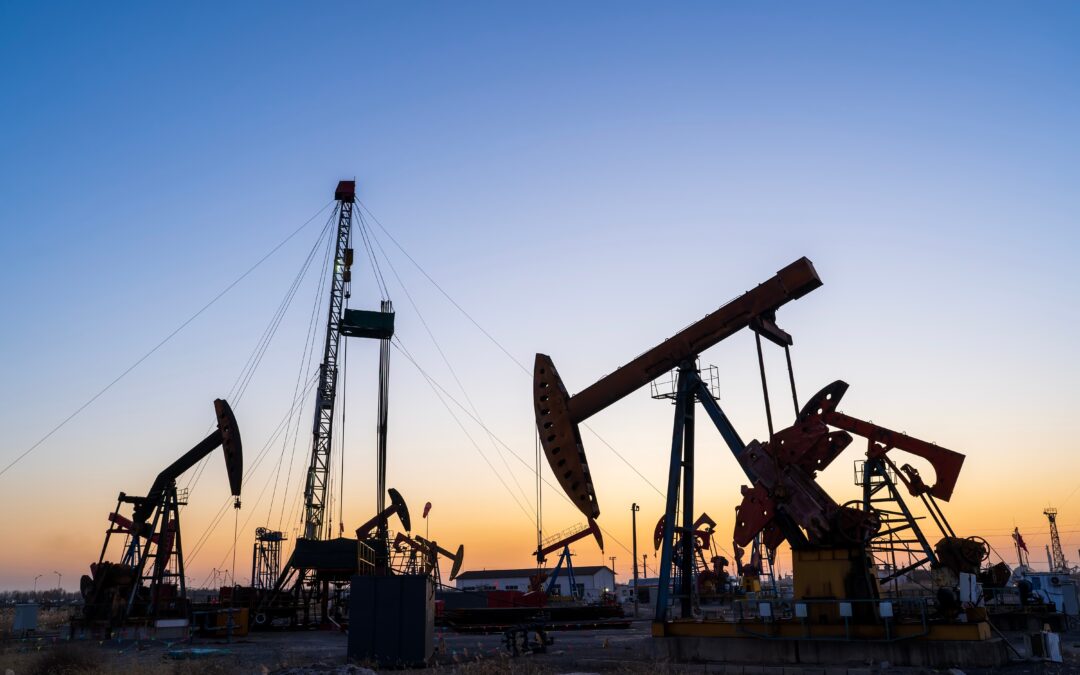 One of the first moves President Trump made in his second term was to declare a “National Energy Emergency.” This executive order leans heavily on the claim that the previous administration shut down U.S. fossil fuel production and left America dependent on foreign energy. But that narrative simply isn’t true. In reality, over the past four years, U.S. crude oil production soared to a record-breaking 13 million barrels per day — the highest ever, surpassing even Saudi Arabia. Natural gas production is also at an all-time high, with the U.S. leading the world by producing 41.2 million cubic feet in 2023 alone. So why declare an energy emergency when the country is producing more energy than ever? This move takes us into a confusing and dangerous place where “up” is “down” and “shortage” means “abundance.” The consequences of this declaration are unfolding quickly. The Department of Interior has announced new permitting rules that aim to sidestep key environmental protections, like the Endangered Species Act and the National Environmental Policy Act. Public lands—places many Americans treasure for outdoor activities like hunting, fishing, and hiking—are suddenly up for grabs for more oil and gas drilling. Beyond public lands, this order could even threaten private property rights by encouraging federal agencies to use eminent domain to force landowners to give up property for energy development. At a time when U.S. oil production is at historic highs and oil companies are already profiting handsomely, this raises serious concerns about fairness and property rights. But the bigger issue is this: Energy markets don’t respond to political orders. They respond to geology and economics. U.S....
 For the first time in over 60 years, the Bureau of Land Management (BLM) – the federal agency that oversees oil and gas activity on federal lands – has increased its bond minimums. Bonds are an insurance policy for American taxpayers – the true owners of federal lands – and are supposed to ensure that companies who drill on federal lands have set aside enough funds to cover plugging and clean-up costs once production is finished. But for decades BLM’s oil and gas bond minimums were never increased, not even to account for inflation and even as companies drilled tens of thousands of wells on federal land across the country. Companies could provide as little as $10,000 in bond coverage per lease no matter how many wells they drilled. This flawed-system led to a $13.7 billion deficit between the estimated reclamation costs for the 90,000+ wells on federal lands and the total amount of bonds held by BLM. Slowly but surely, BLM’s new bond minimums will bring that deficit down. Companies now have three years – a very generous timeframe, mind you – to increase their lease bonds to the new minimum of $150,000. This level accounts for inflation, as well as reclamation costs for a typical lease on public lands. And it builds on bonding reform at the state-level, as many states, including Wyoming, recently strengthened their bonding requirements in response to what some have described as an orphaned well “crisis.” Not surprisingly, the oil and gas industry would much prefer that you – the American taxpayer – continue to foot the bill for its clean-up costs. The...
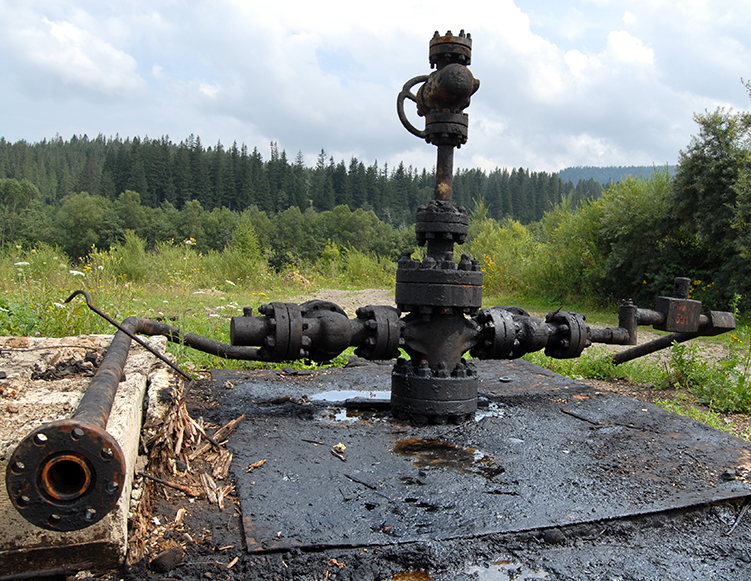 PRESS RELEASE October 24, 2023 CRS Releases “Restoring Accountability” Follow-up Report on Taxpayer Exposure from Orphaned Oil and Gas Wells Conservatives for Responsible Stewardship (CRS), a national grassroots organization with more than 23,000 members, has produced a new report following up on its 2021 report Broken Promises, which detailed the staggering taxpayer exposure from orphaned and abandoned oil and gas wells. “Despite agreeing, as a condition of their drilling permit, to fully clean up and plug well sites once they are finished using them, oil and gas companies regularly skip out on that obligation, leaving us taxpayers on the hook for billions of dollars in clean-up costs,” explained CRS president David Jenkins. This new report, with updated data, underscores how this fiscal burden on taxpayers continues to grow and explains how long overdue new rules proposed by the Department of Interior (RIN 1004–AE80) to significantly increase its oil and gas program bonding requirements can help. In Broken Promises, we reported that at the end of FY2020, there were more than 96,000 “producible and service wells” on federal public lands, which could leave U.S. taxpayers on the hook for as much as $13.7 billion in future clean-up costs. Since then, BLM has approved more than 11,200 additional permits for oil and gas companies to drill new wells on federal public lands—wells that, without federal bonding reform in place, potentially exposing U.S. taxpayers to an additional $1.6 billion more in clean-up costs. Taxpayers could eventually have to pony up as much as $15 billion, and that does not account for any potential future wells from the 34,000 oil and gas leases...
 The Endangered Species Act (ESA) turns 50 years old this year. The law, which was passed in 1973 by overwhelming bipartisan majorities in Congress (unanimous in the Senate) and signed into law by President Nixon, stands as an enduring testament that we can rise above our lesser instincts and be good stewards of what President Reagan referred to as “this magical planet that God gave us.” From the deliberate and cruel efforts to eradicate wolves and grizzly bears from the Lower 48, to the carelessness that drove the bald eagle, our national symbol, to the brink of extinction, history is full of examples where mankind has been intolerant of wildlife and/or ignorant of its needs. Thanks to the ESA, bald eagle numbers have recovered across the Lower 48, going from a low of 1,000 or less in the 1950s to more than 300,000 today. Wolves and grizzly bears have also rebounded significantly, with healthy, sustainable populations in several states. Unfortunately, too many people fail to recognize the ESA as the conservative law it is. President Reagan once rhetorically asked, “What is a conservative after all, but one who conserves?” Conservative political theorist Russell Kirk went even further, writing in a Baltimore Sun op-ed, “nothing is more conservative than conservation.”Wildlife, from apex predators to the tiniest insects, play an essential role in keeping the earth’s life-sustaining ecology healthy. Bears and wolves, by preying primarily on weak and sick moose, deer, or elk, make the populations of those ungulates healthier. And pollinators, such as bees and butterflies, are essential to our food crops. From my personal experiences, I have come to...
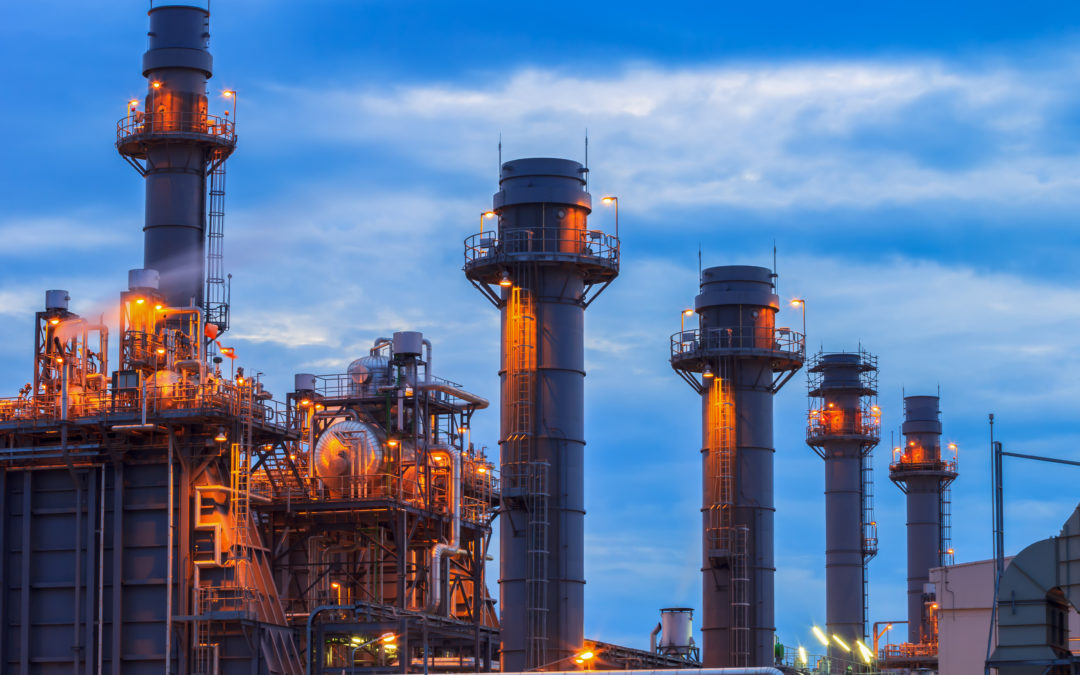 With economy-wide inflation still plaguing us and stretching paychecks thin, we should be paying extra close attention to energy prices. The cost of energy affects the price of almost everything. In the transportation sector, high fuel prices increase the costs of getting products to market or directly to your home. High electric and natural gas bills contribute to inflation not only by raising the cost of doing business, but also by directly increasing the cost of powering your home. In both cases, the higher prices can be attributed largely to the fact that fossil fuels are global commodities with their price set by international markets. That means that events virtually anywhere in the world can increase our energy costs here in the United States. The recent spike in these energy costs are tied directly to Russia’s invasion of Ukraine. Sanctions on Russian energy in response to the invasion—and retaliatory measures by Russia—have tightened oil supplies and greatly increased Europe’s demand for U.S. natural gas. Russia is a major energy producer, and over the years, Europe became heavily dependent on Russia for its oil and natural gas supplies. Europe has finally woken up to the strategic vulnerability posed by being over reliant on Russian energy, and is now turning to the U.S., the world’s leading producer of natural gas (Russia is second) to help wean itself off of Russian natural gas. That has dramatically changed the natural gas market here. For a long time we had to use all of the gas we produce domestically because there was no way to ship it overseas, which kept our natural gas prices...